Tag: Paris

  • Cathédrale de Notre Dame

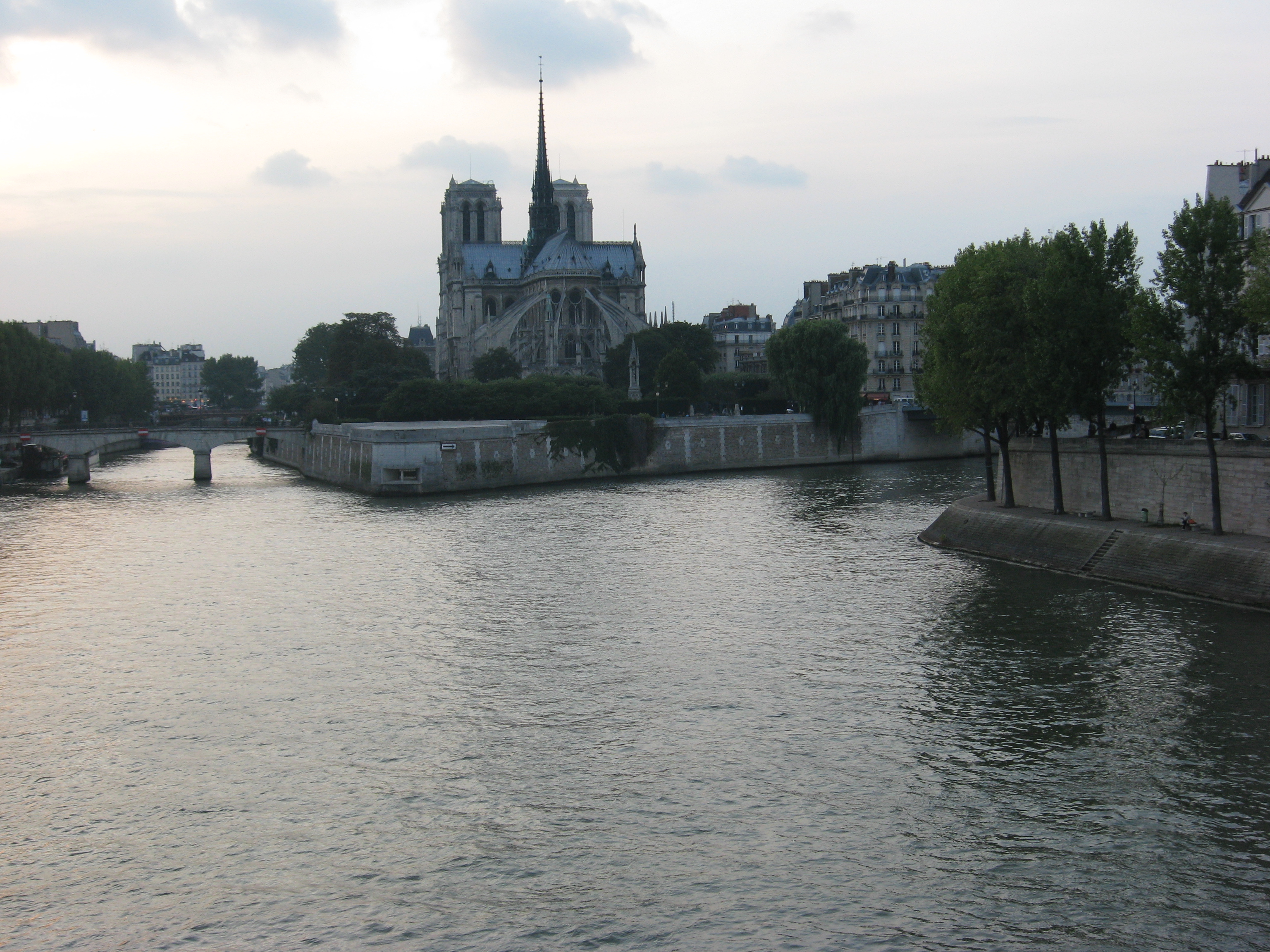
    IMG_0164Ah, Cathédrale de Notre Dame at dawn,

    in fog, sepulcher white, barely formed,

    the façade emerges from the mist

    each statue takes his place above the arches

    the flying buttresses hold high the nave

    the solidity of the wooden doors.

    a vast square with the lanterns unlit

    even the birds rest silent in the cold

    on the banks of the river Seine.


    Ah, the nightclubs at dawn

    soften the music

    spill out their partiers

    the liquor still on their tongues and breath

    drunk, some shout at young couples

    already speeding across Pont Neuf

    on their vespas.


    One last look at the ghostly church

    then we go into the depths of the metro, St. Michael,

    where the light then darkness

    takes our anonymity into the tunnels

    hacked into the depths of the earth

    we are miners of the underground

    hurrying from Cathédrale de Notre Dame

    to destinations unforetold.


    FEWalls   December 21, 2007

  • L’imagination pouvoir.

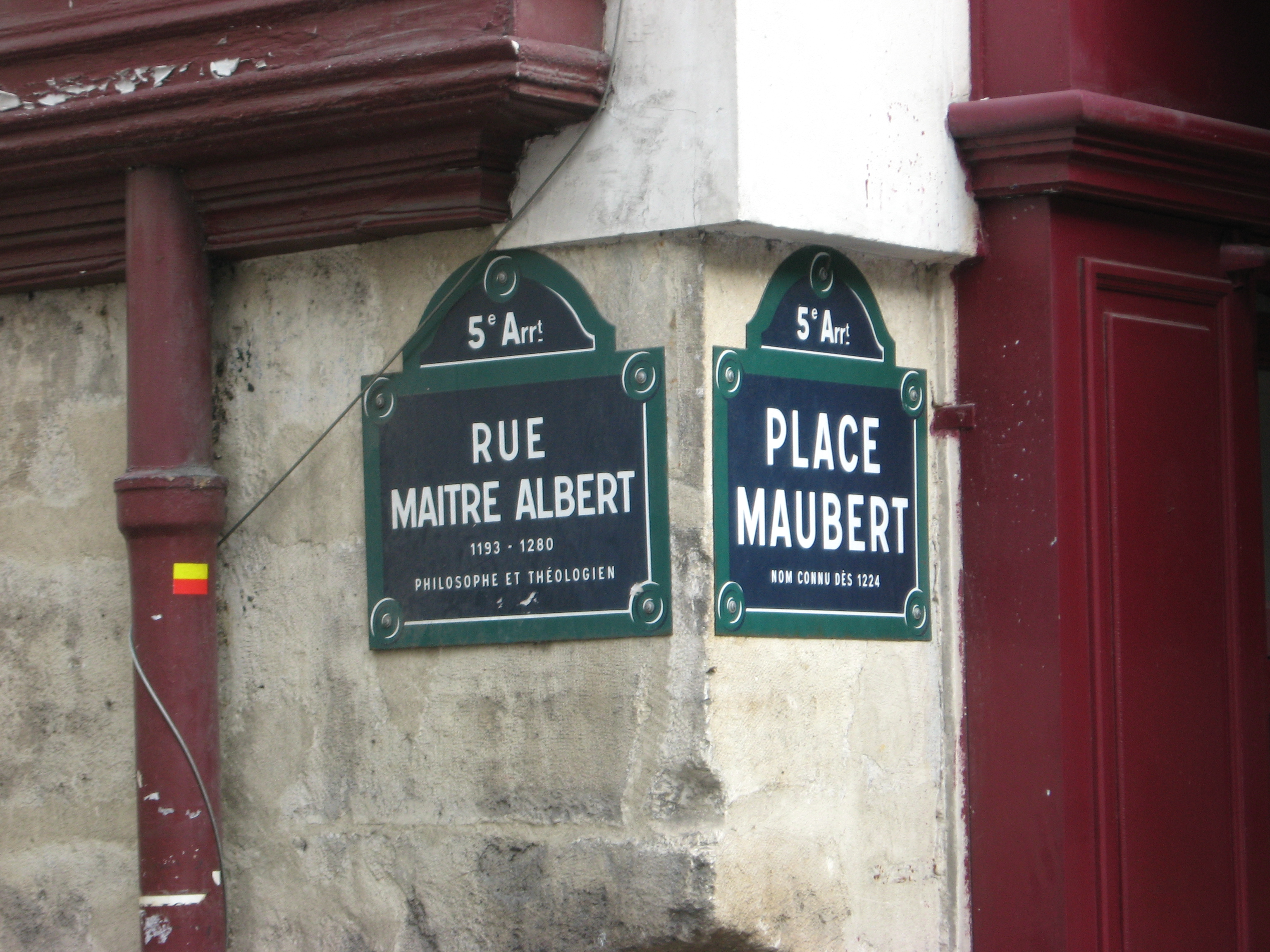
    IMG_0486_2“No to Vietnam! No to tradition!”

    In 1968, students barricade Place Maubert

    tearing up the cobblestones

    stoning police that march

    shoulder to shoulder toward them.

    The students may forget the year 1588,

    the first revolt and barricades of Paris

    but not the journalist.


    Now, the locals drink at the cafe

    in once the filthiest street in Paris,

    when the putrid waste of the Sorbonne

    flowed down the lanes

    where 800 years ago the masters of divinity

    lectured their students

    who sat on bales of hay even in the rain

    so hungry were they for news of God.


    A fountain shines now under the sycamores

    and the aged and women with babies

    sit on the benches where 600 years ago

    Francois I, the King, burned alive the Lutherans

    ignoring their screams

    and generation after generation watched

    the executions in this “cesspool of Maubert.”


    Now, the sounds of a rugby match

    echo in the plaza from the bar

    the Frenchmen make their only goal,

    and all stand and sing the Marseilles badly.

    Even the one scribbling on a paper

    joins in shouting out the chorus


    “To arms, citizens!
    Form up your battalions
    Let us march, Let us march
    That their impure blood
    Should water our fields.”


    Now the water trickles from the stone mouths of lions

    on the crown of the hill

    water runs down toward the Seine

    through the gutters along each street

    past the fromagerie, the patisserie,

    the charcuterie, the bottles of wine stacked in pyramids,

    and in one window of the cafe,

    a woman bends over a notebook

    her hair in disarray as she writes of Place Maubert

    as if the world could not see her steady hand

    planning the next revolution.


    FEWalls 2005

  • Souvenir de Paris

    Paris 2010 633In this café off Rue Severin,

    we will meet someday again

    in this smoke-filled room of laughter,

    and toast,

    Salute!

    as the cameras flash their language of truth and lies

    and the secrets we keep from each other

    and from ourselves.


    In this café

    where the woman in the portrait

    moves away from us toward Algeria

    in her black dress,

    her lips parted slightly, mysteriously.


    We gather in this café,

    in from the lights of the Seine

    and eat lamb and coucous with our wine,

    forgetting the flea markets and mannequins,

    the flower and bird markets,

    the Moulin Rouge, the Oberkampt,

    Le Marais, Montmartre, Montparnasse,

    forgetting everything we have metered and measured,

    counting out the seconds of our lives,

    brief or eternal.


    We have gathered in

    from the Renaissance facades and interiors,

    from the haunts of Hemingway, Pascal, Picasso, Monet,

    the cobbled streets of the great and the humble.


    We have gathered in

    from the priests blessing the wafers,

    the protesters with their banners and masks,

    the police in uniform or not,

    and the parade of white-headed veterans

    marching erectly to L’Arc de Triomphe.


    Here in war-wounded Paris,

    the plaques, the red, white, blue carnations

    next to a man’s name and a date,

    mark a place of sudden death,


    and beyond, at Pere Lechaise

    where its canopy of chestnut trees in pink bloom

    covers the chapels of bone and ash,

    and the stones of remembrance

    enrich the monuments to the deported.


    We remember that “those who love

    will be reunited,”

    perhaps, here, in Paris

    where lovers embrace without fear

    and kiss the brow of their lover

    as the Metro races through the underground caverns


    toward the gardens of light and Luxembourg

    where a girl leans out from her wooden horse on the carousel

    to catch a ring with her stick,

    and little boys push sailing boats

    in the winds of the sea on the pond,

    and every statue comes to life

    in the blur of the sun, quickly, as the blink of a camera’s eye.


    We have gathered here in this café

    with the portrait of the Algerian woman,

    who will never glimpse the Notre Dame, the Louvre

    or the Seine.

    Perhaps for her, we remember.

    Perhaps, for ourselves.

    “On oublie jamais,”

    We do not forget.


    FEWalls

    May 18, 2001
  • Francine in Paris – Day 14

    Can 3.73 million people be wrong?  That’s how many folks visited the Centre Georges Pompidou in 2013.  The art is great!  The building is UGLY.  This gigantic building made of a steel superstructure with reinforced concrete in a “post modern, high-tech” style was erected in beautiful, historic Paris after destroying markets and buildings valuable to Parisians.  The escalators to the floors are on the outside of the building; all the pipes are exposed.  Opened first in 1977, it has not aged well:  stained vinyl, cracked concrete, paint peeling.  Now that I have ranted a bit, I will say that the light in the galleries is good and the art is well-displayed.  Of course, there is almost no place to sit down and look at the art.  Not human-friendly.

    The floor I visited at the Pompidou was full of early 20th century art, mostly paintings but a few of Matisse’s bronze sculptures and a sprinkling of photographs.  (Man Ray liked to photograph Gertrude Stein!). Some artists I knew a little about such as Picasso, Kandinsky, Paul Klee and George Braque.  Others were new to me such as Seraphine de Senlis (she went mad, but her canvases are full of vigor and color), Anne-Marie Uhde, Fernand Leger and Sonia Delauncey.  My new personal fav is Frantisek Kupka who painted Gigolette in rouge which I will try to post in Facebook.  (Tech issues have been challenging here.)

    After the Pompidou,  I visited Opera Garnier which could not be more different.  Here the iron structure of floors, vaults and roof is concealed by masonry, marble, paintings, statuary and the plush red seats in the auditorium.  The ceiling of the auditorium is by Marc Chagall and honors composers such as Wagner and others.  The style is Second Empire/Beaux Arts.  The name of the opera house recognizes the architect, Charles Garnier, who worked on it from 1861-1875.  Its fame is not only from its lavish beauty, but also the 1910 book by Gaston Leroux, Phantom of the Opera, and the 1986 musical by Andrew Lloyd Webber.  With the opening of the Opera Bastille, Opera

    Garnier is used primarily for ballet.

    Well, Deanna and I are headed home tomorrow.  Thanks for sharing the journey with me.  Merci beaucoup!


  • Francine in Paris – Day 12+

    “There couldn’t be a more splendid world, and here I am existing in it.”

    —      Mary Oliver from her poem, “I’m feeling fabulous, possibly too much so but I love it.”

    Today in the Latin Quarter, we visited the Musee National du Moyen  Age with about 600 little children.  Ok, maybe not that many and maybe they were well-behaved, maybe.  This museum has an amazing collection of medieval art housed in a 15th century building.  The collection is composed of ceramics, statuary, tapestries, religious artifacts etc.  The tradition of carving elephant ivory was underway by 400 BC.  Yikes.  Is there any hope for elephants?

    For me, the most stunning artifacts were the gigantic-wall-size woven tapestries featuring a unicorn and golden-haired maiden set on a millefleure background.  The subject of each of five tapestries was one of the senses: hearing, seeing, touching smelling, tasting.  The sixth one is an unravelled mystery.  Why is the beautiful maiden accepting the box of jewels?

    Deanna and I wandered toward the Jardin de Luxembourg, home of the Senate and the extensive garden.  When it’s warm, the garden is packed with sun worshippers and children sailing toy boats on the large, circular pond.  We found a cafe called Polidor which opened in 1845 and looked it.  However, this was clearly a place for those the late, great anthropologist Jim Spradly would call the “real regulars.”  A long table ran down the center of the room.  Other tables ran perpendicular to it.   Everyone sat together divided only by red/white checked paper place mats.  We joined a gray haired man (bald on top) with a heavy beard who was shuffling bills and making business calls on his iPhone whike he drank red wine and finished his lunch.  We noticed that a lot of men wore real chapeau and hung them on the coat rack.  We were the only estrangers.  I had the beef and mashed potatoes for 12 euros. Delicious.  Busy, crowded.  Pit toilet.  Yep.